

Do you suffer from older-sibling syndrome? Symptoms include extreme self-righteousness. Professional big sister Daniella Parete Clarke investigates how family relationships evolve in adult life, and seeks expert advice on how to handle these changes
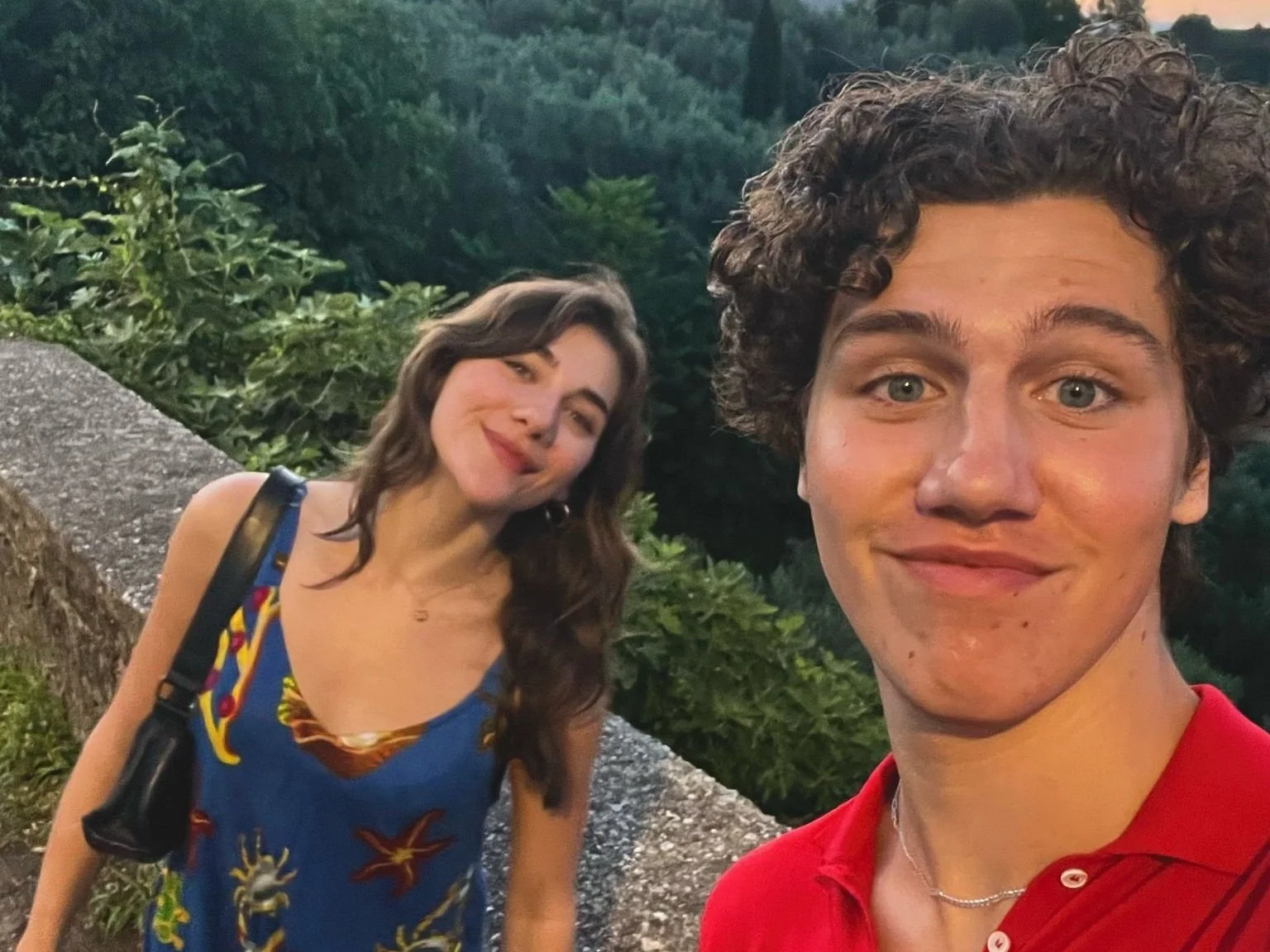
The writer and her brother
Some months ago, I attended a talk with the author Coco Mellors to promote her latest book, Blue Sisters. During the signing portion of the evening, Mellors asked me if I have any sisters. “No,” I said. And because that seemed an awkward, insufficient response, I panicked and followed up with: “I am a sister.”
My partner had pointed out only a few days prior that I often refer to myself as an Older Sister – usually in opposition to her role as the younger sister in her family – as though it’s a badge of honour. I immediately realised she was right. The way I talk about my familial role is comparable to the way men discuss their military service. My Sisyphean burden of eldest sisterhood is, apparently, a source of great pride and a vast responsibility. “I think you put too much stock in sibling dynamics,” she told me. “I’m beginning to think you have a complex.”
Naturally, this made me wonder: has being a sister had a measurable impact on my adult life? Has it made me more resilient, optimistic, irritable? On a surface level, this is hard to prove. I live in a different city from my brother, and across the sea from my parents. My brother and I used to talk on the phone multiple times a week for hours on end, but in recent months our conflicting schedules have reduced communication to Instagram Reel exchanges. And yet, it’s clear to me that siblingdom remains a defining aspect of who I am, Eldest Daughter Syndrome be damned.
Read more: What my older sister taught me about sex
My brother and I have always been close. We’re aligned on many things, from our dispositions (introspective) to what we find funny (Robert Ridgely in Boogie Nights saying “May I see it?”). As I approach the midpoint of my twenties, and my brother heads towards the beginning of his, I wonder how sibling relationships continue to evolve throughout our lives. According to licensed clinical social worker April Crowe, it’s common for siblings to notice changes during this period.
“Your twenties are a time of substantial personal growth, and sibling relationships are bound to shift along the way,” says Crowe. Managing my role as a big sister, she says, is about learning “to be available and supportive, but not overbearing”, which seems antithetical to everything an older sister is made out to be.
“As adults, sibling relationships should be based on mutual respect, not obligation. Offer advice when it is wanted, celebrate each other’s wins, and be a source of comfort when things get tough. But also, respect that your sibling might not always need or want you to be heavily involved in every decision.” Crowe adds. “Being present for important moments – a job change, a tough breakup, or a stressful week – can make a huge difference.”
Growing together – or apart
While, for most, being present and connecting with their sibling is the goal, some twentysomethings decide to use this transitory period to create distance. “If one sibling was hurt, traumatised or abused by another sibling growing up, they may finally feel the strength and confidence to build strong boundaries or cut off contact altogether,” Michelle Hession, a licensed clinical social worker, says. “It wasn’t in their control to do this during childhood, but it can be in adulthood.”
Even in less extreme situations, your twenties can still be a time of addressing family dysfunction and deciding how you want your relationships with relatives to adapt going forward. Hession suggests “talking to a therapist to help sort out what you’re feeling and identify what is healthy for you and what is not. If the relationship has bigger challenges, you might consider inviting your sibling to family therapy with you”.
“Older siblings should help younger siblings with their life choices only if the younger sibling asks for it.”
Therapy jargon like “trauma” and “boundaries” might sound alien compared with how you currently talk to your family, but the emotional truth behind these terms is more straightforward. This period of reckoning can be about you and your sibling opening up for the first time and being honest about how you feel, Hession explains
“Being vulnerable and asking your sibling if they would allow you to share some of your feelings with them can be really scary and hard. But, oftentimes, the relationship is already hard,” Hession says. “Choose your hard.”
Advice for older siblings
Crowe suggests shifting from the position of protector to supportive equal. “Older siblings often step into a mentor role, especially if they have always given advice or looked out for their younger sibling,” she says, but explains that, “as adults, that dynamic needs to evolve”.
“Be there to offer guidance if they ask, but let them make their own choices and mistakes,” she advises. “Growth happens when people learn to navigate life independently, and your relationship will feel more balanced if there is room for independence.”
Justine Carino, a psychotherapist, offers an even simpler rule: “Older siblings should help younger siblings with their life choices only if the younger sibling asks for it.”
Shared experiences and communication
While relationships are always in flux, my brother and I have noticed changes since we reached adulthood. A few years ago, we entered a period of reflection, during which we kept remembering and discussing moments from our childhood that impacted our attachment styles and characters.
Hession tells me this recounting of shared experiences is in line with a trend she’s noticed among siblings who grow closer in adult life. “Both being adults, [siblings] may have more in common at this point,” Hession says.
For his part, my brother notes that talking to me is easy because we have a shared language. “Not just in terms of the words we use – although those tend to be similar,” he says. “But I know you pretty much always understand what I mean, and probably even feel the same way.”
Read more: The friendships that shaped me, as a queer Nigerian man
This is unsurprising among siblings who feel they have had similar experiences during childhood, Hession adds. “Going through life changes and experiencing losses – like losing friends or parents getting divorced – may make siblings appreciate what they do have,” she continues. “They may have leaned on each other during these experiences in ways they never did before, making them closer. Often, siblings who did not get along very well growing up may be closer than ever during these years.”
Carino agrees. “Usually, we see siblings get along much better as they enter adulthood, and they begin to connect over things they liked and didn't like in their childhood and adolescence,” she explains.
Beyond likes and dislikes, it’s about connecting to someone – perhaps the only person in the world – whose experience of adolescence resembles your own. (And, as my cheerily brother points out, one of the only people who are pretty much guaranteed to stick around until you die.) “This can bring siblings together because it gives them an opportunity to understand their family and their identity. It provides perspective and answers questions,” Carino says.
Understanding yourself and your role
So, establishing your relationship with your adult sibling is a discovery of your family, and your history, but it’s also a discovery of the self. Siblings are somewhat like mirrors in this way. As Crowe says: “Your twenties are about finding a balance between connection and independence. The best thing you can do is embrace the changes.”
Which brings me back to the start, and my feeling that being the Older Sister is as much about my own identity as it is about my closeness with my brother.
Likewise, separate from me, my brother is establishing his identity; he’s becoming a self-reliant person. And while we live in different places, and we don’t have as many heart-to-hearts as we once did, we are always together in some capacity.
I called my brother on my way home. The sky was pink and still light; one of the first signs of spring’s arrival. “You can see the moon,” my brother told me, and when I looked up I could see its faint shape. “Isn’t it cool that we’re looking at the same moon right now?” he said.