
How the UK Supreme Court ruling affects all women
Sam Mason unpacks the UK Supreme Court's definition of a ‘woman’ and its implications on trans women and beyond
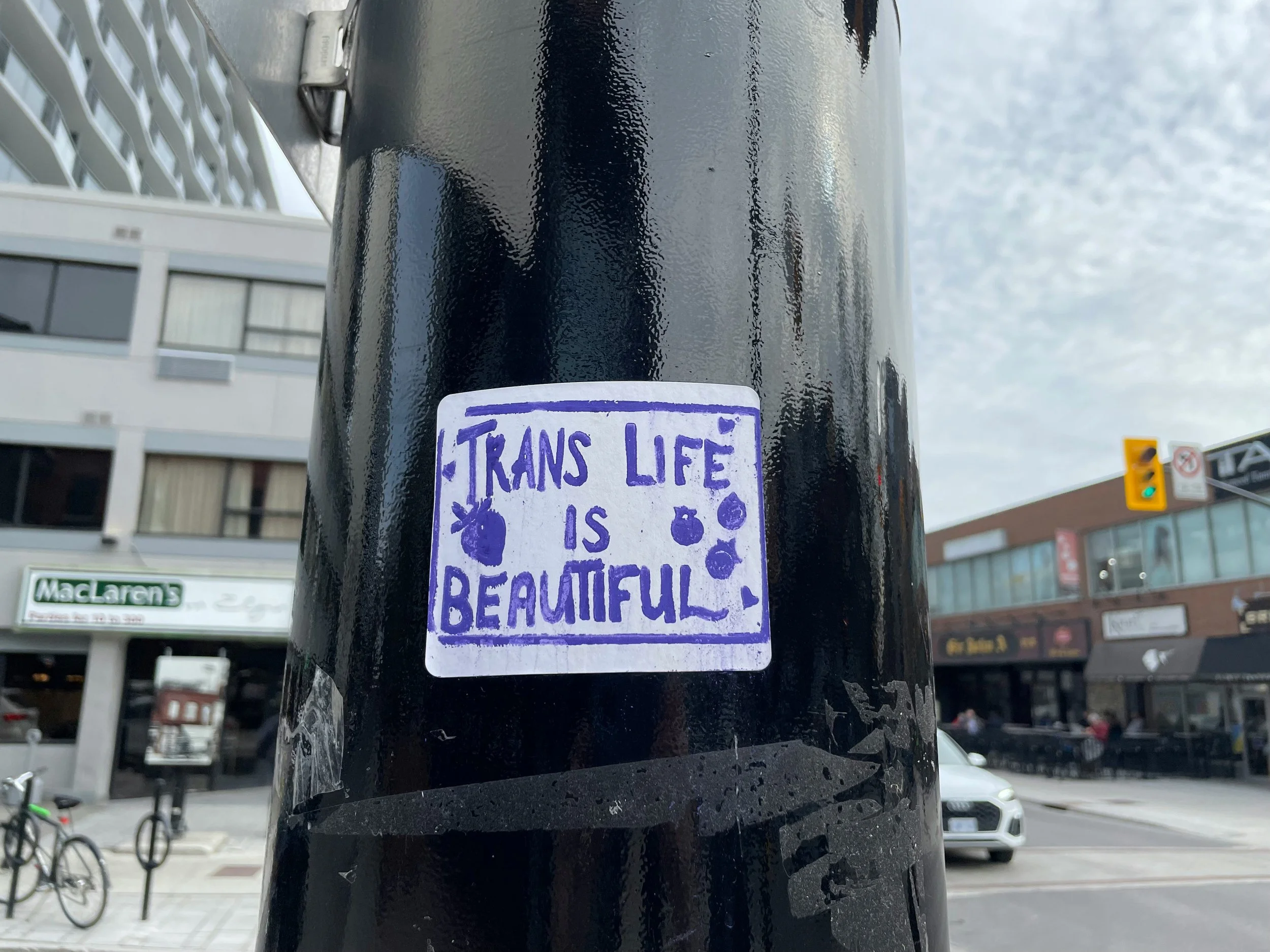
Unsplash / charliewarl
On 16 April 2025, the UK Supreme Court ruled that the legal definition of a woman now excludes transgender women.
While, previously, the legal definition of ‘woman’ under the Equality Act could be interpreted to relate to either cisgender or transgender women, this historic ruling states that the terms ‘woman’ and ‘sex’ should only relate to biological women and biological sex.
Although the transgender ‘debate’ has been used as a political distraction from the *real* problems in society for a long time, the Supreme Court has now consolidated this conservative ideology in law in a blow to transgender people across the world.
As well as having a detrimental impact on transgender people now, this decision will have far wider-reaching implications across society. So, let's break down what happened…
Read more: A (brief) history of LGBTQ+ law in the UK
The UK Supreme Court’s decision on the definition of a woman explained
“The unanimous decision of this court is that the terms woman and sex in the Equality Act 2010 refer to a biological woman and biological sex,” Supreme Court judge Lord Hodge states in the ruling.
This means that transgender women, even with a Gender Recognition Certificate (GRC), are no longer legally recognised as women in single-sex spaces, such as changing rooms, homeless hostels, segregated swimming areas, or medical services.
The case was brought to the court by The For Women Scotland (FWS) organisation, arguing that sex-based protections should only apply to people that are born female.
Many self-proclaimed 'women's rights activists' such as JK Rowling celebrated the 'triumph', sparking backlash online.
Despite this, Lord Hodge states: "We counsel against reading this judgement as a triumph of one or more groups in our society at the expense of another, it is not." Instead, the ruling suggests it is to prevent discrimination against both women assigned female at birth (AFAB) and transgender people.
A confusing sentiment considering the implications this has on not just transwomen, but everyone. The countless social media posts from devastated transgender individuals and organisations are in direct juxtaposition to the ruling.
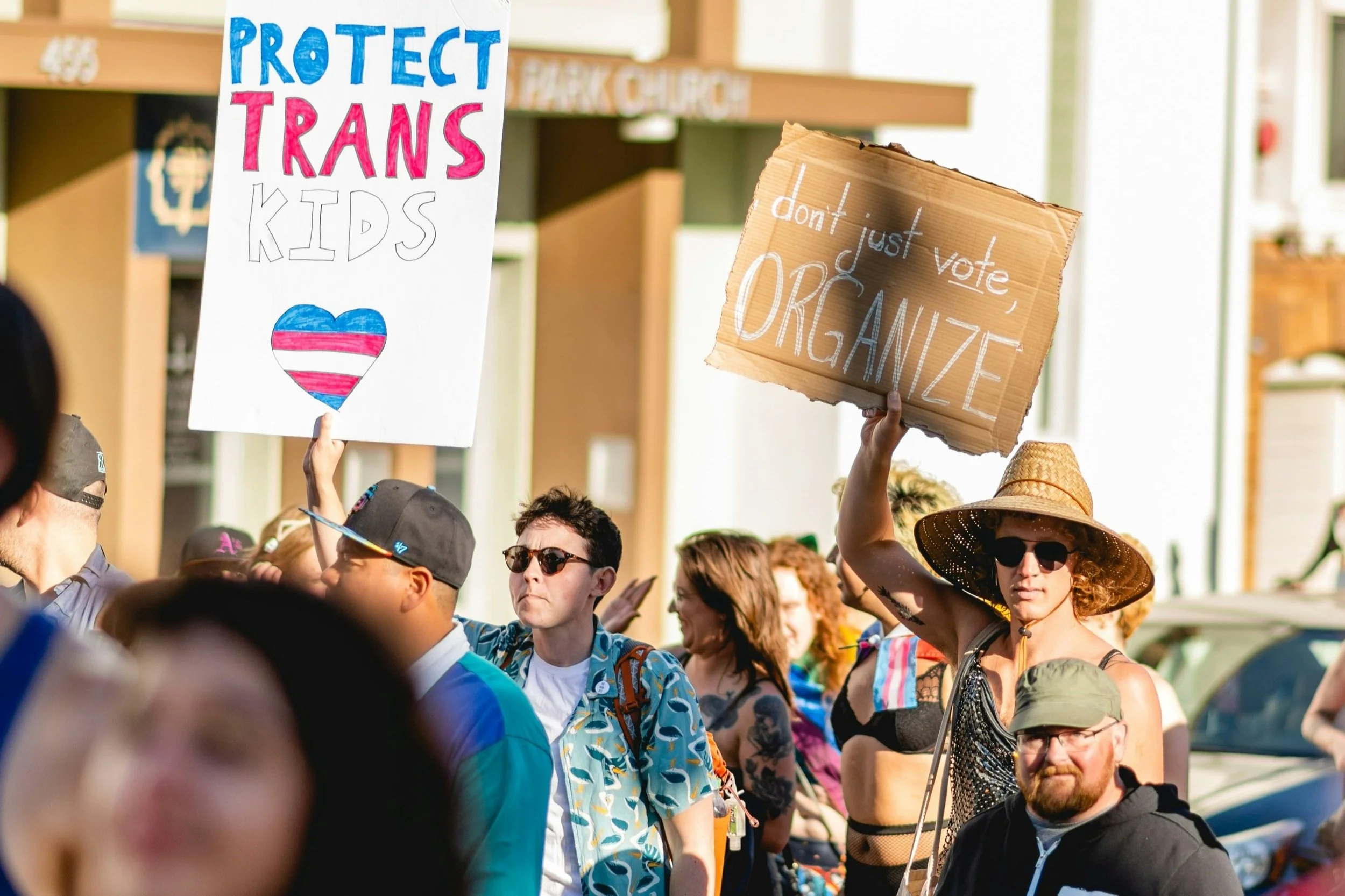
Unsplash/ Patrick Perkins
Backlash to the Supreme Court’s ruling
Alongside many other individuals fighting for trans-rights, TikTok Star and actress Bel Priestley uploaded a raw and impactful video of her reaction to this bill.
Bel unpacks more of her feelings in an interview with ITV, stating that “transgender hate crimes are on the rise”, and that she feels “terrified”.
Many LGBTQ+ organisations have also spoken out.
Mermaids posted a statement on their Instagram:
Read more: Politically erect: How Gen Z navigate relationships in a polarised era
Meanwhile, Stonewall said in a statement that it: “shares the deep concern at the widespread implications for today’s ruling from the Supreme Court…we will work with stakeholders across all sectors to provide as much clarity as possible. Stonewall will continue its work with the Government and parliamentarians to achieve equal rights under the law for LGBTQ+ people.”
Why are people against the Supreme Court judgement?
This ruling not only has legal implications but also social ones, sending a clear message to the transgender community that their identities are invalid in certain contexts. This is a reminder to an already vulnerable community that their lives are seen as negotiable.
Essentially, the 2010 Equality Act’s definition of a woman is now based on biological sex, which begs the question: how are they going to police this?
Despite the clear implications on trans people, the Supreme Court claims that trans individuals are still protected under this act, “not only against discrimination through the protected characteristic of gender reassignment, but also against direct discrimination, indirect discrimination and harassment in substance in their acquired gender”.
But it’s hard to see how giving legal precedence to the exclusion of trans women in certain spaces won’t translate elsewhere – most crucially for trans people, but more broadly, too.
So, why does the Supreme Court ruling affect everyone?
The “clarity” the FSW was seeking has actually caused even more confusion and conflict in a never-ending argument from the far-right that women are unsafe, and are at risk of assault, while sharing single-sex spaces with transgender individuals.
The ruling has not only excluded trans women from using women’s bathrooms, but raised questions around what this means for trans men, as well as intersex and non-binary folk.
Oscar Davies, a barrister who identifies as non-binary, says that, in relation to those who are intersex, “the judgement says absolutely nothing… [it’s] a classic case of intersex erasure”.
As for those who are nonbinary, “because they don’t detangle sex and gender there’s an implication that non binary perhaps doesn’t exist…Not great.”
“The reality is we need legislation that protects both intersex and non-binary [folk]..So..Who wants to start a campaign?”
Elsewhere, those opposing the judgement have pointed out that this could increase trans-based discrimination and misogyny. As MP Dawn Butler points out in a debate with conservative politician Simon Clarke on Sky News, the ruling now means that trans men will now need to use women’s toilets. “How are you going to stop them? By asking to see their genitalia? It makes no sense.”
The idea that trans women can now be stopped from using women’s bathrooms, as per interim guidance published by the Equality and Human Rights Commission, also raises questions around how this will be policed.
It’s unclear whether the police will be permitted to search individuals they deem as looking ‘transgender’. This has already been implemented by the British Transport Police following the ruling. A spokesperson for the British Transport Police told the Guardian the day after the ruling (17 April): “As an interim position while we digest yesterday’s judgment, we have advised our officers that any same-sex searches in custody are to be undertaken in accordance with the biological birth sex of the detainee.”
“How are you going to stop a man (biological) from going into a woman’s toilet and saying ‘I’m a trans man’?”
To use FSW’s rhetoric against them, this could also mean that biological men could masquerade as trans men, to enter women-only spaces, opening the door to make things even more unsafe for women.
But the question still stands: does this not leave all women vulnerable? If authorities can conduct searches based on who they perceive to be a trans woman, what does this mean for women who present as less visibly ‘feminine’ – particularly butch lesbians?
The bill has also called into question the definition of lesbian attraction, equating it with a literal interpretation of same-sex attraction has a Gender Recognition Certificate, and therefore is legally identified as a woman, is attracted to a woman, this would somehow alter the meaning of “lesbian”.
The ruling states: “A lesbian must be a female who is sexually oriented towards (or attracted to) females, and lesbians as a group are females who share the characteristic of being sexually oriented to females. This is coherent and understandable on a biological understanding of sex.”
But this is not the experience of the majority of the lesbian community. Lesbians are the most likely community to say they know a trans person (92%), and to say they are “supportive” or “very supportive” of trans people (96%).” according to Just Like Us.
It is clear that another decision surrounding identity has been made without consulting the communities it impacts. And if this ruling can take place, seemingly overnight, what else can be decided for all communities?
What happens now?
In a world where women's bodily autonomy is at risk, the focus should not be on transgender women..The National Police Chiefs’ Council and College of Policing declared the scale of violence against women and girls as a national emergency last year. Trans people are being used as a scapegoat to distract from the real perpetrators of sexual assault.
Understandably, the LGBTQ+ community and allies have banded together against this bill, holding protests, amplifying trans voices, going onto social platforms to explain why this has caused pain, hurt and confusion among the community.
Already, trans organisations have organised protests across the UK, the first one having taken place outside Westminster on 19 April 2025. For those who can’t attend a protest for any reason, the Good Law Project has created a crowd funder, “Help us challenge the Supreme Court’s judgment on trans rights”, to support a legal case against equalities minister, Bridget Phillipson.
What can you do to help?
During this devastating time for the transgender community it is important that we band together to support and uplift our trans siblings.
Support the trans community by:
Attending protests against the bill. Please find the list of upcoming protests here. Keep an eye on updates across social media.
Put your money where your mouth is by supporting crowdfunds, such as the Good Law Project who aims to oppose the judgement on the basis of it breaching the UK Human Rights Act.
Support Transgender charities.
Educate yourself on transgender issues.
Check in with the transgender individuals you know to make sure they know they are seen, supported, and loved.
Write to your MP to demand legal protections for trans+ people across different aspects of the law. Find atemplate here and here.
There is so much more that we can all do to support one of society's most vulnerable groups. Let’s band together to be on the right side of history.